Showing posts with label British Columbia. Show all posts

Wednesday, April 1, 2015

#MuseumWeek Retrospective!

Last week's #MuseumWeek tweetstorm was an awful lot of fun, especially following the #SciArt event just a few weeks earlier. I thought I'd share a couple of photos and thoughts for each day's theme – I didn't manage to post something for each day on Twitter, but I'll fill in some thoughts and photos here!

Day 1: Secrets
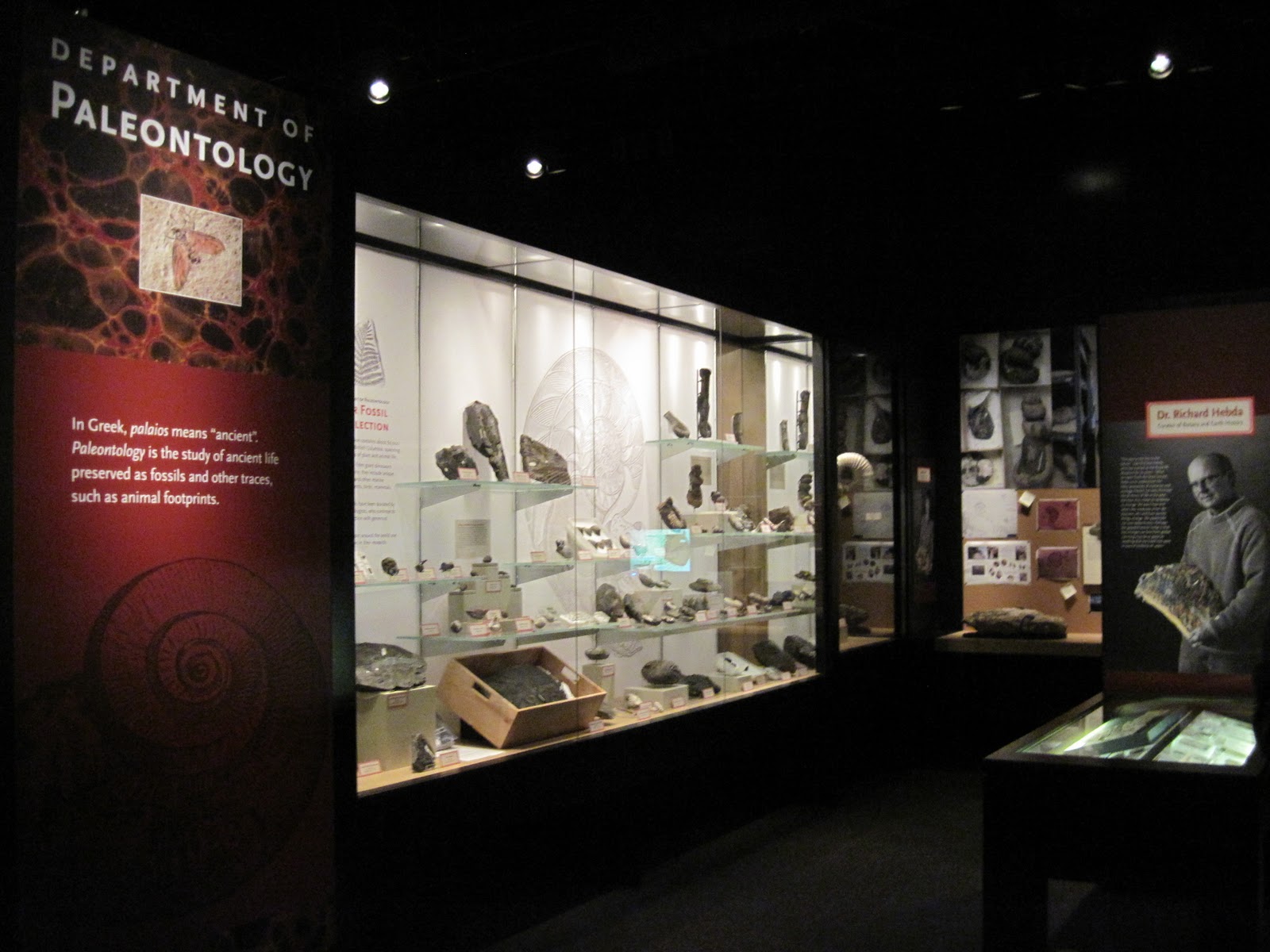
One of the nice things about working in the Paleontology & Geology Research Lab at the North Carolina Musuem of Natural Sciences is that "behind the scenes" is part of the scene. You can actually stare at me while I'm working away at my computer each day, if you desire to do such a thing. More interesting, probably, would be to watch our staff, students, and volunteers preparing fossils in the main lab space - secrets waiting to be revealed. But hey, whatever floats your boat!

If you're in Raleigh, stop by and say hi to Carnufex!


Day 2: Souvenirs
I am kind of a Stuff Person and also have a Thing for Museum Gift Shops. As such, I have loads of doodads from my various museum visits. One of the things I like picking up are postcards, especially those that have non-Tyrannosaurus dinosaurs featured on them. For a while, I had these up on my wall at my apartment in Edmonton. Those who have visited my UofA office will also be familiar with my embarassingly large collection of ankylosaur toys, or as I prefer to refer to them, 'scientific models for grown-ups'.

Recognize any museums from your own travels?


Day 3: Architecture
I had a lot of fun with this one on twitter because I LOVE interesting museum architecture. A couple of favourites:

Permian Hall at the Moscow Paleontological Museum:

...which also had custom door hinges, like plesiosaurs!

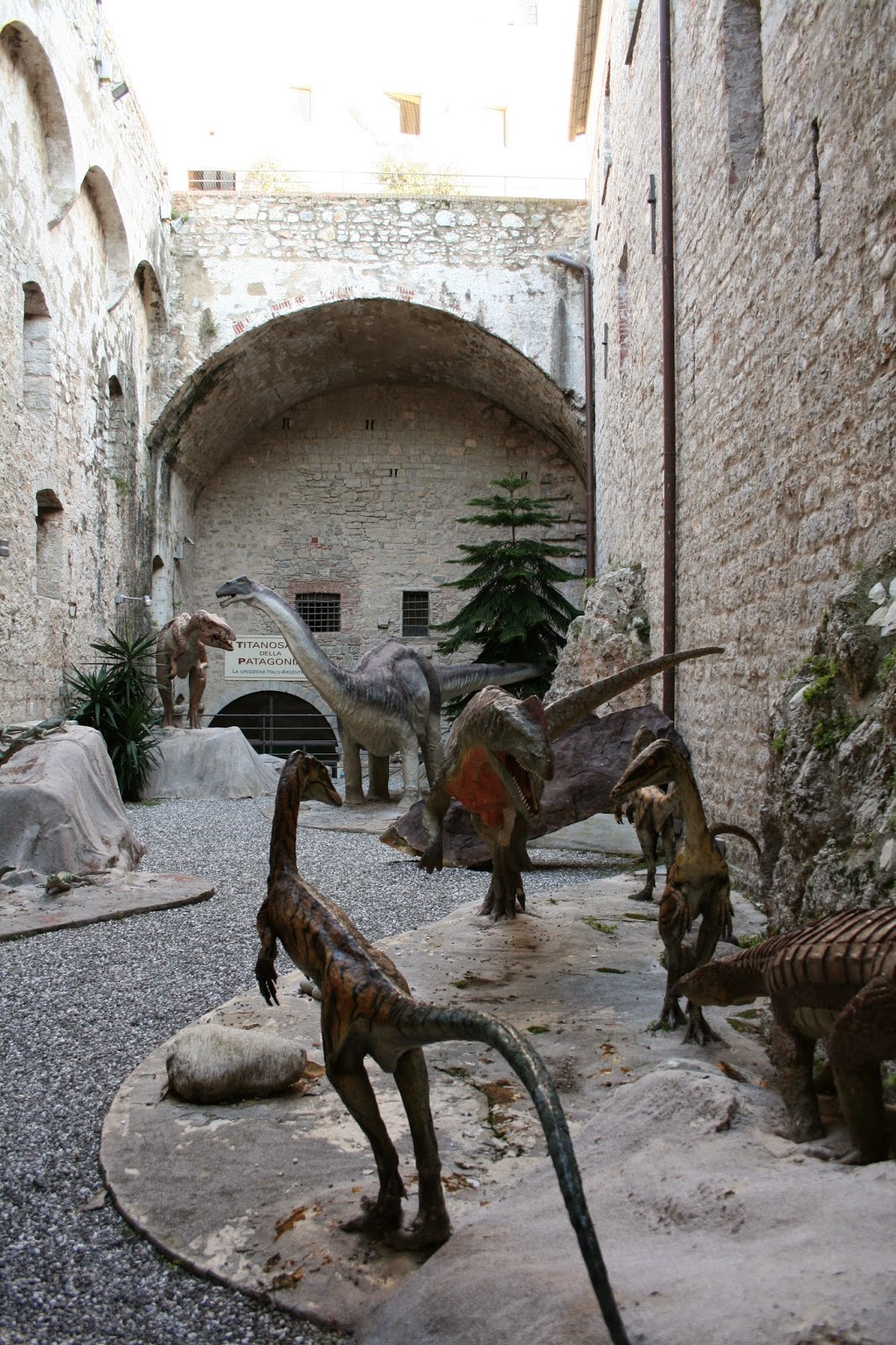
Dinosaur museum in an old castle in Lerici, Italy:

I wasn't sure about the ROM Crystal at first, but it's grown on me:

And I think the SECU Daily Planet at the NC Museum is pretty swell (on the inside, it's a theatre!):


Day 4: Inspiration
Some non-dinosaur stuff for inspiration day: I really like learning about Canadian art and its history, and one of my very favourite museums on the entire planet is the Museum of Anthropology at the University of British Columbia. If you're in Vancouver, DO NOT MISS THAT MUSEUM. It's an emotional experience to step into the exhibits at this museum and be surrounded by so much creativity and history and skill. Here's a sample to sharpen your brain.


Day 5: Family
I'm lucky to have had great parents that fed my dinosaur obsession as a kid with trips to museums near and far. I'd love to dig out some photos from the before time, but for now, I'll leave this day for my own memories. What are some of your favourite museum memories from your childhood?

Day 6: Favourites
I like busy museums that are crammed full of stuff, especially when that takes the form of a Wall of Stuff or a Hall of Stuff. Here's a few of my favourites.

Hall of Stuff at the Museo de La Plata


Day 7: Pose

I don't like posting pictures of myself very much, so I'll just include one here to finish off: here's Pinacosaurus (nee "Syrmosaurus") at the museum in Moscow, with me for scale.


That's it for now! What did you share for Museum Week?

Thursday, August 25, 2011

Nanaimo Group Field Trip

I've just returned from the Canadian Paleontology Conference, which was held at the University of British Columbia in Vancouver, BC. I participated in the field trip to Vancouver Island, where we explored Nanaimo Group outcrops. Gwawinapterus was collected from Nanaimo Group rocks on Hornby Island, and although we didn't get out to Hornby, we did check out several other formations and localities. Here's a few highlights from the trip!


After taking one of the ferries from Vancouver to Nanaimo, we stopped at Departure Bay. During the day we'd be working our way up through the Nanaimo Group and therefore into deeper water environments. The Haslam Formation outcrops here and represents a shallow marine environment.


We saw some really great inoceramid clams at Departure Bay.


Next stop was Englishman River Falls Provincial Park, a beautiful spot. Didn't find many fossils, but I enjoyed the waterfall very much!


We also enjoyed the lushness of the temperate rainforest.


We next headed out to Trent River, a popular place for amateur collectors. Here the Pender Formation crops out, as well as the Comox and Haslam Formations. Abundant nodules contain ammonites, bivalves, and other invertebrates. Elasmosaurs, mosasaurs, and turtles have also been found near this locality! (See more about the Puntledge River elasmosaur at the Courtenay Museum.) These outcrops represent deeper water facies including turbidites.


Pete tries his hand at cracking open a nodule.


We finished the day off with a stop at the Qualicum Beach Museum, which features a nice display of fossils collected in the area as well as casts of specimens from all over the world. A cast of the Gwawinapterus holotype is also on display here!

Tuesday, February 22, 2011

Back to the RBCM

I had the nicest commute to work yesterday morning.


A brisk jaunt over the Rocky Mountains, then a smooth descent into this fluffy loveliness.


And here's what I found on the other side of those clouds!


Yes, I was back at the Royal BC Museum in Victoria, BC, to return the holotype of Gwawinapterus to British Columbia. I do not know if there are plans to display the specimen, but there is currently an excellent 'Behind the Scenes' exhibit with a great display from the Palaeontology Department featuring other specimens from Hornby Island (the Gwawinapterus locality), north-central BC, and more.


During my last visit I was able to snap this nice cast of a segment of trackway from the Lower Cretaceous Gething Formation of Peace River Canyon. These are on display outside the museum, sort of near the main entrance. This was one of Phil Currie's first major projects after being hired at the Provincial Museum of Alberta (now the Royal Alberta Museum). The trackways in this area were originally collected by CM Sternberg in the 1930s, and subsequently by the Royal Ontario Museum in 1965. With the construction of the WAC Bennett Dam (which would eventually fill to form Williston Lake), an extended expedition was organized by the Provincial Museum of Alberta, and the tracksite was visited from 1976-1979. More than 1700 footprints were documented during these expeditions, and at least 100 trackways were identified. The photo above shows the foot and handprints of a hadrosaur, but theropod, ankylosaur, and even bird footprints are known from the Gething Formation.
 
 
You can read more about the Peace River Canyon tracks here (free PDF!):
 
Currie PJ. 1983. Hadrosaur trackways from the Lower Cretaceous of Canada. Acta Palaeontological Polonica 28:63-73.


Wednesday, January 12, 2011

Reconstructing Gwawinapterus

Yesterday I talked about both how I came to work on what would become Gwawinapterus, and what’s actually interesting about that scrappy little jaw. Today I wanted to talk a little bit about something a little less technical – the ‘reconstruction’ of Gwawinapterus that I created for the media release.


I put reconstruction in quotation marks because I’m working with just the front of the snout – the tip of the iceberg, really – and recreating a whole animal, so there’s going to be an awful lot of guessing involved. However, there may be a bit less guesswork than you might expect.

So far, istiodactylids seem to me to be a fairly morphologically conservative group, and by that I mean that most of the species look fairly similar to each other. None are particularly large or small, and their cranial and postcranial anatomy is pretty consistent. So, the overall shape of Gwawinapterus is probably not too far off – it probably had a long, low skull and may not have had any sort of crest or ornamentation like a lot of other pterosaurs. Like other pterodactyloid pterosaurs, it would have had a short tail, long neck, and long metacarpals, and may have walked with an erect, parasaggital gait. One somewhat notable difference between Gwawinapterus and other istiodactylids is that Gwawinapterus would have had a comparatively deeper snout, and it may turn out it had a less elongate skull compared to other istiodactylids as well. Pterosaurs had a fuzzy covering somewhat like mammalian hair (they’re called pycnofibres!) and I’ve given Gwawinapterus a slightly shaggy neck reminiscent of ravens.

(Thanks yet again, Wikipedia.)

Based on comments on some of the news articles that came out yesterday, people seem to either love or hate the colour pattern I chose. That’s ok. The pattern I chose was inspired by the art of the Kwakwaka’wakw, who live on the northern end of Vancouver Island. The name Gwawinapterus is partly derived from the Kwakwala word for Raven, Gwa’wina, because the skull of many istiodactylids remind me of Raven masks.

(This one's from me this time, from a visit to the MOA at UBC.)

If you’ve visited Vancouver’s Stanley Park and seen the totem poles or visited the Museum of Anthropology at the University of British Columbia (which you must if you are in the area!), you’ll have seen a lot of the Kwakwaka’wakw style of art. (There are many first nations tribes in British Columbia and each have their own distinct language and artistic style, so I think it’s important not to lump them all into ‘northwest coast art’.) This art is highly stylized and so by default the reconstruction of Gwawinapterus is quite stylized. Although I’m not so bad at drawing in a sort of sparse, graphic-designy style, I don’t have the skill or time to do full shaded renderings – I’ve got nothing on artists John Conway or Mark Witton or my friend and colleague Lida Xing. But stylized I can do, so stylized pterosaur you get!

Despite the stylized nature of my Gwawinapterus drawing, there are certainly some elements of the reconstruction that are somewhat grounded in real life. Lots of animals have black and white counter-shading and we’ve seen earlier this year that a reddish-brown pigment was found in at least some feathered dinosaurs. Black markings around the eyes are found in lots of mammals (badgers, raccoons, and cheetahs come to mind) and birds (Atlantic puffin). The ‘salmon egg’ ovals down the back and legs might be a bit off, but lots of animals certainly have spots and splotches.

(...wikipedia)


And now, before this post gets too long, I shall direct you to further reading if you’re interested in some of the less pterosaury points touched on in this post:

The UBC Museum of Anthropology: You could literally spend hours browsing their entire collection – you can narrow your search by choosing People --> North America, and then Coast Salish, Gitxsan, Haida, Kwakwaka’wakw, Tlingit, or Tsimshian, to name just a few.

The Raven Steals the Light: Raven is perhaps the most popular recurring character in many northwest coast stories. This book, by Robert Bringhurst and noted artist Bill Reid, introduces several Haida stories featuring Raven and other colourful characters.

Tuesday, January 11, 2011

Raven Wing

Thanks to Dave Hone for hosting a guest post about my recent paper over on his blog Archosaur Musings. I talked a bit about how I came to work on this specimen there, but here I’d like to talk about the specimen itself and what it means for pterosaur palaeontology.

Gwawinapterus is neat for a bunch of reasons. In Canada, we’ve got pterosaur material from Dinosaur Provincial Park that probably belongs to Quetzalcoatlus (including an amazing wing bone with embedded velociraptorine tooth!), but Gwawinapterus is the first pterosaur that is only known from Canada. It’s also, as far as I know, the first cranial material of a pterosaur from Canada (which may not be saying a lot, but there you go).


Victoria, you always pick the prettiest specimens to work on.


Gwawinapterus is also an istiodactylid pterosaur, which is interesting by its own right simply because there aren’t a lot of istiodactylids known in the fossil record, period. Howse, Milner, and Martill showed in 2001 that “Ornithodesmus” latidens from the Isle of Wight actually represented a distinct genus of pterosaur, Istiodactylus, and thus the Istiodactylidae was born. Since then, there have been some more istiodactylid teeth identified in Europe, but most other species of istiodactylids come from China. These include Istiodactylus sinensis, Nurhachius, and a host of others. All istiodactylids have been named in just the last ten years.

Prior to finding Gwawinapterus, there was no indication that istiodactylids were found in North America...with a pretty big and potentially interesting exception. Bakker (1998) noted the presence of some pterosaur teeth in the Morrison Formation that bear a striking resemblance to istiodactylid teeth. Is it possible that istiodactylid pterosaurs were present in North America since the Jurassic? Only more discoveries will help us to sort out the biogeography of the group.

And finally, all other istiodactylids are found in much older rocks from the Early Cretaceous, whereas Gwawinapterus is of Late Cretaceous age. No other pterosaurs of this age have teeth! Why do we find a toothed pterosaur so late in the game? What were the functional advantages to retaining or losing teeth in pterosaurs? Many folks in the media have asked me what kind of things Gwawinapterus was eating. It’s a fair question, although I can’t really give a very satisfactory answer – I suspect it would have been just fine at taking down small prey, and may also have been a good scavenger. The small, tightly packed teeth are somewhat reminiscent of piranha teeth, although I am leery that by saying this people will picture swarms of Gwawinapterus surrounding some big dinosaur and nibbling it to bits within minutes. Even though that would be awesome. (Incidentally, this behaviour is probably not natural for piranhas, either.)

Grr! (Thanks, Wikipedia.)


With its long snout and sharp little teeth, maybe Gwawinapterus was good at sticking its nose into carcasses and nipping bits of meat off the bones. This is not an original idea – Howse et al. proposed it back in 2001 for Istiodactylus latidens. Whatever it was doing, Gwawinapterus was probably doing it differently from other pterosaurs at the time, and I think that’s interesting.


Literature!

Andres B, Ji Q. 2006. A new species of Istiodactylus (Pterosauria, Pterodactyloidea) from the Lower Cretaceous of Liaoning, China. Journal of Vertebrate Paleontology 26:70–78.

Arbour VM, Currie PJ. 2011. An istiodactylid pterosaur from the Upper Cretaceous Nanaimo Group, Hornby Island, British Columbia, Canada. Canadian Journal of Earth Sciences 48:63-69.

Bakker RT. 1998. Dinosaur mid-life crisis: the Jurassic–Cretaceous transition in Wyoming and Colorado. New Mexico Museum of Natural History and Science Bulletin 14: 67–77.

Currie PJ, Jacobsen AR. 1995. An azhdarchid pterosaur eaten by a velociraptorine theropod. Canadian Journal of Earth Sciences 32:922-925.

Howse SCB, Milner AR, Martill DM. 2001. Pterosaurs. In: Martill DM, Naish D (eds.) Dinosaurs of the Isle of Wight. The Palaeontological Association, London, UK., pp. 324–335.

Sazima I, Machado FA. 1990. Underwater observations of piranhas in western Brazil. Environmental Biology of Fishes 28:17-31.

Wang X, Kellner AWA, Zhou Z, Campos DA. 2005. Pterosaur diversity and faunal turnover in Cretaceous terrestrial ecosystems in China. Nature 437: 875–879.